
Choosing a web design agency: 7 questions to ask before you sign
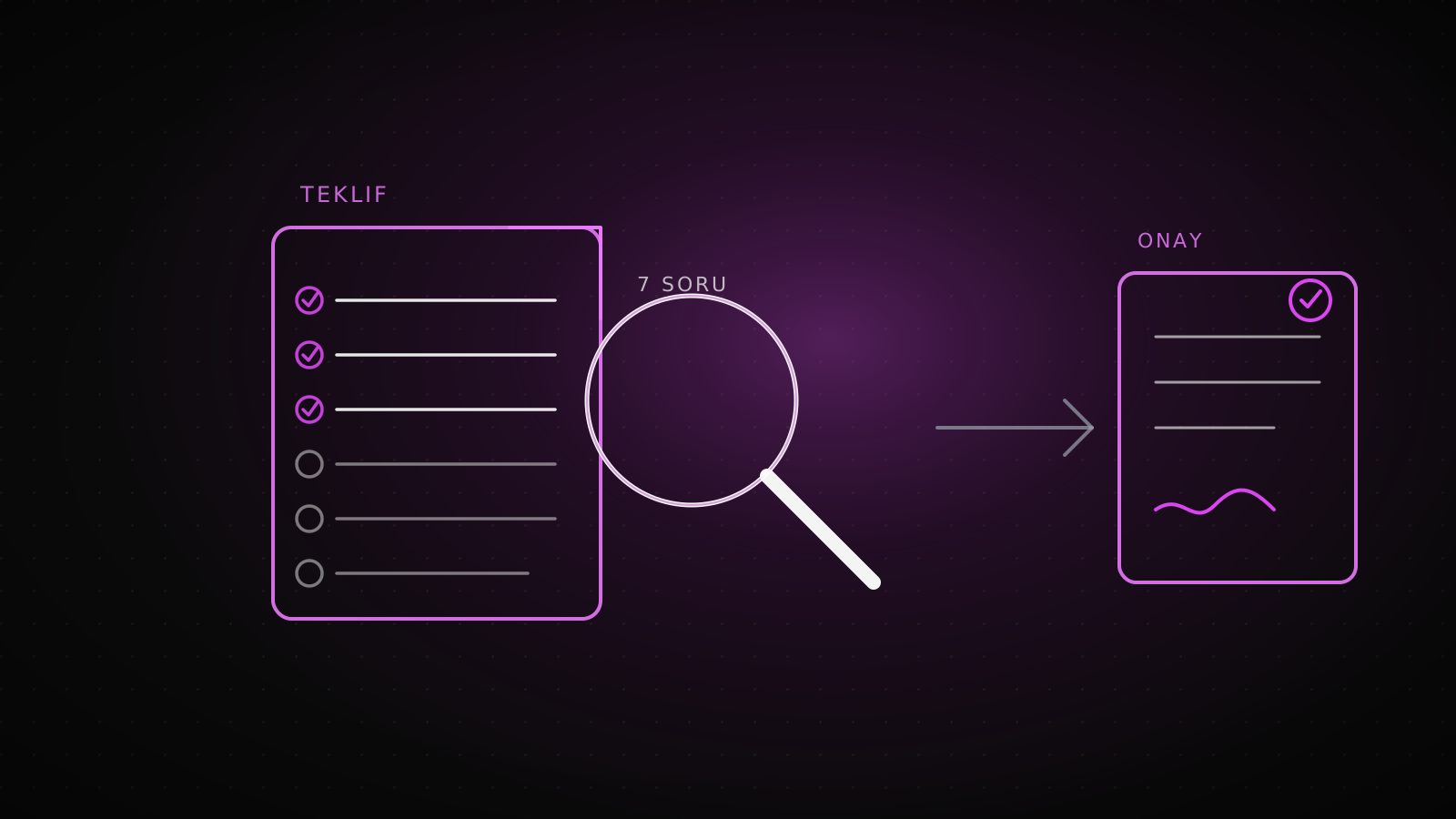
Quote comparisons usually collapse into one number. The real cost shows up after delivery, in maintenance, SEO, scope, and who actually owns the site.
Comparing web design agencies usually comes down to one number on a page. The real cost shows up after delivery: who handles maintenance, whether SEO and the URL structure survive the move, which line items come back as extra invoices once scope grows. If a quote doesn't answer these in writing, they need to be asked out loud before signing. The seven questions below, asked in the same order for every quote, surface the gap that the price line alone hides.
TL;DR
Price alone isn't the decision. Who handles maintenance after launch, whether SEO and URLs survive the migration, whether scope is written line by line, whether references can actually be checked, what the delivery process looks like, who ends up owning the code and the domain, and what the quote explicitly excludes: asked in that order, these seven questions show the real difference between quotes.
Where a bad agency pick actually costs you
A business that picks the cheapest quote usually hits the same wall three months later: a small text change is needed, the agency is unreachable or bills by the hour, because maintenance was never a line item in the quote. At another firm scope grows after launch; "let's add a few more pages" turns into a negotiation because the quote never named a page count. At a third, old URLs don't redirect to the new site's structure, search rankings reset, and the loss only gets noticed months later.
None of these are a coding mistake. All three are a question that never got asked at the quote stage turning into an invoice after delivery. Reducing quote comparison to a price column keeps all three invisible.
7 questions to ask before you sign
The seven questions below are the checklist to run through on every quote. Each one gets its own section after the overview.
Who handles maintenance after launch
Is it a named line item in the quote or an assumption
Do SEO and the URL structure survive
Will old addresses redirect to the new site
Is scope written line by line
Page count, revision rounds, and what counts as extra work
Can references actually be verified
Is a direct conversation with a past client possible
What does the delivery process look like
Defined checkpoints and a single point of contact
Who owns the code, content, and domain
Can the site actually move if you switch agencies
What does the quote explicitly exclude
Stock imagery, copywriting, hosting renewal, named or not
1. Who handles maintenance after launch
If a price change, a new service page, or a security update is needed after launch and the quote never named who's responsible, that cost comes back later as an hourly bill. The question to ask is direct: is maintenance part of this quote or a separate line, and if separate, for how long and at what scope. Don't sign before testing CMS access; ask for a demo of the panel and check whether the team can actually edit a page or a price in it.
2. Do SEO and the URL structure survive the move
Moving from an existing site to a new one usually changes the URL structure, and redirecting old addresses (301s) to the new ones is its own piece of work that rarely shows up in a quote. Without a redirect map, existing search rankings reset, the loss surfaces weeks later, and recovering it takes months. The question: will old URLs be mapped to new pages, and is that part of the delivery itself.
100/100
FK Optik's Lighthouse score, mobile and desktop, with SEO built in from zero
12.7 MB → 1.6 MB
Muhkem İnşaat's first-load payload, after images got resized at the source
100/100
Truexim's SEO Lighthouse score, with search infrastructure built from zero
Source: the FK Optik, Muhkem İnşaat, and Truexim builds.
3. Is scope written line by line
"Corporate site" can mean three different scopes from three agencies: one quotes 5 pages, one 8, one promises unlimited revisions but counts anything past the first round as extra work. The question: are page count, revision rounds, and the definition of out-of-scope work written in the quote, or only described verbally.
4. Can references actually be verified
A screenshot in a portfolio shows a project finished, not how the delivery actually went. The question: can a past client be reached directly, did that project go as planned, and if not, what changed. An agency that avoids this without a clear reason is usually avoiding the process question, not the reference itself.
5. What does the delivery process look like
A quote with a single delivery date and no checkpoints in between makes the middle of the project invisible. The question: what order do design approval, content entry, and pre-launch testing run in, and is there one named contact or a different person each time.
6. Who owns the code, content, and domain
If the domain is registered under the agency's own account, switching agencies later can hold the site hostage. The question: whose name is the domain and hosting account under, and is access to the source code and database handed over at delivery. "We'll sort that out later" is a red flag on its own.
7. What does the quote explicitly exclude
Two quotes with the same total can diverge entirely on what's excluded: stock image licensing, copywriting, first-year hosting renewal, an SSL certificate, setting up a business email. The question: does the quote have a named "not included" list, or is it left unclear whether these sit inside or outside the total.
A template for comparing 3 quotes
The table below is a template for placing three quotes side by side. Each row gets the agency's actual answer; a blank cell marks a question that was never asked at all.
| Question | Quote A | Quote B | Quote C |
|---|---|---|---|
| Maintenance included, for how long | |||
| 301 redirect plan in place | |||
| Page count and revision rounds | |||
| Number of verifiable references | |||
| Delivery checkpoints and one contact | |||
| Domain/hosting under whose name | |||
| Excluded line items |
If all three columns stay blank on the same row, the problem isn't the quote, it's that the question was never raised at all.
When this checklist isn't needed
Comparing quotes from scratch isn't necessary for a small update with an agency already trusted through a track record; that trust was already built on past work. For a low-stakes, short-lived project like a single campaign page, running through all seven questions can be overkill. This list fits a first corporate site investment, or a search for an agency expected to carry the site long-term.
Frequently asked questions
Should the lowest quote always win?
No, not on its own. A low price often means maintenance, a redirect plan, or revision rights were simply left out of the quote. Once two quotes answer the same seven questions with equal clarity, the price gap becomes a meaningful factor.
How do you actually verify references?
Asking to speak with a past client directly is a reasonable request. An agency that avoids it without a clear reason is itself a data point for the comparison.
What happens if scope isn't written down?
Every extra request after delivery turns into a negotiation, usually ending in an extra charge. Writing scope down holds both the client and the agency to the same expectation.
Whose name should the domain and hosting be under?
The client's own account. A domain registered under the agency's name makes switching agencies harder later, sometimes impossible.
How many quotes are enough to compare?
Three is enough to make a comparison table meaningful. Fewer than two makes it hard to tell where a price actually sits against the market.
These seven questions don't change by sector, only the scope does: the construction side runs the same evaluation in our construction firm website examples guide, and the clinic side in our dental clinic website pricing guide. The site speed comparator shows the post-launch speed gap directly. If a corporate website quote can't answer these seven questions clearly, it belongs back on the table before signing.
The projects this came out of
Corporate
Muhkem İnşaat
Construction corporate site + custom admin panel. 26 projects, bilingual, Next.js 16 + Drizzle/MySQL.
E-Commerce
Hiera
Premium fixtures e-commerce. Next.js 16, Stripe, 3-language storefront + corporate admin.
Corporate
Truexim
Kurumsal site + intranet + mail otomasyonu + uluslararası arama.
Let's talk about what you want built.
Tell us what you want to build and we will work the scope out together.
Ask an AI about Lumiasoft
The question is ready. Let the tool read the site and answer for itself.


