
How to build an export-ready B2B website: turning a PDF catalog into a real storefront
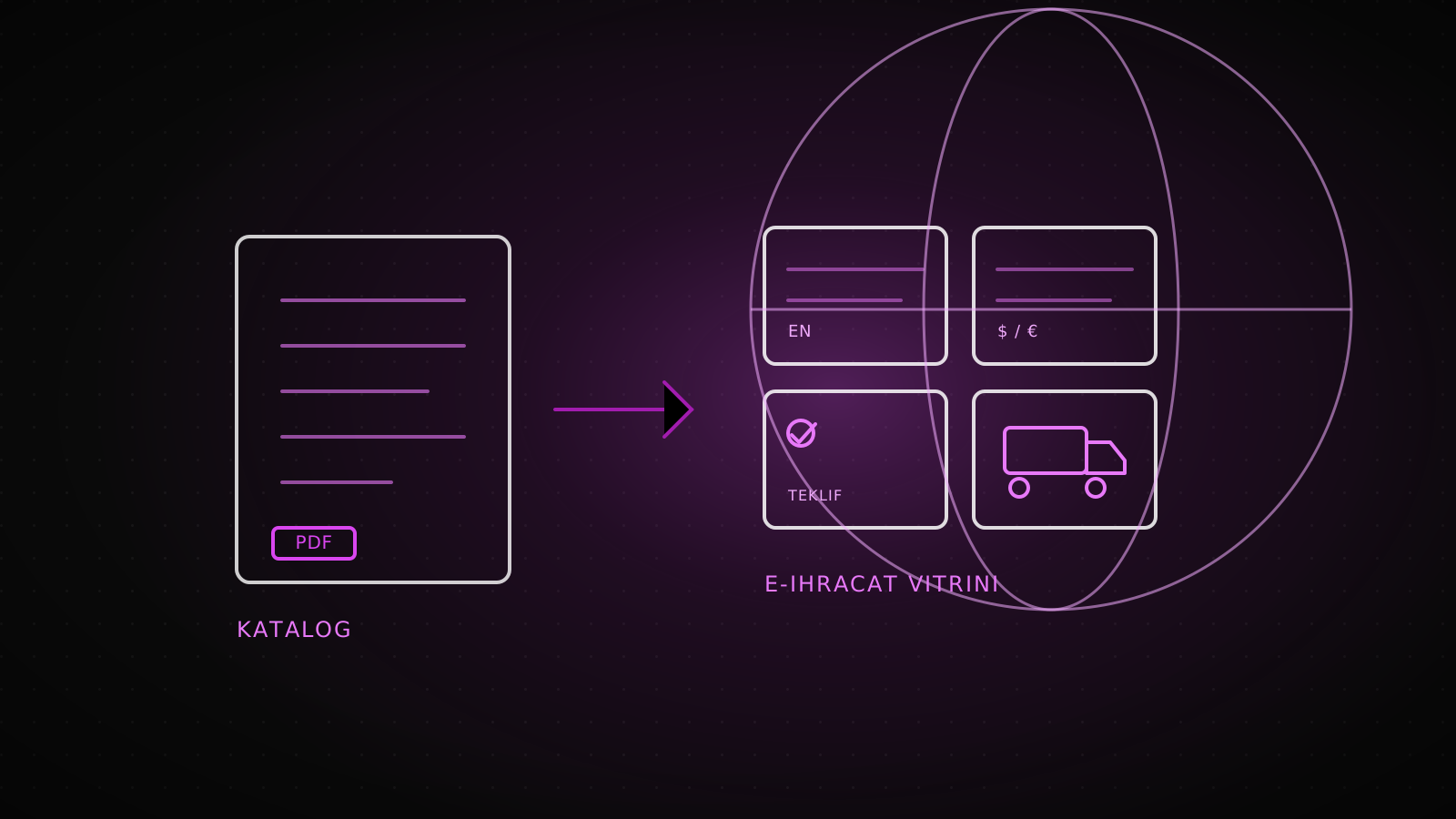
An export-ready website needs more than a translated page. Without international payment, a quote form, and shipping/customs details, a foreign buyer leaves. The minimum structure, the 5 most skipped parts, and a real US-market example.
When a foreign buyer lands on a site and can't find an English product page, a currency they recognize, or a form they can fill out to request a quote, they move to another supplier's site within seconds. Building an export-ready website isn't about bolting an English page onto an existing corporate site. The catalog, payment, quote flow, and shipping information need to be built in an order a foreign buyer can actually trust and finish. The minimum structure has five parts; miss one and the site exists, but doesn't work for the buyer.
Summary
An export-ready website adds international payment, a quote form with destination country and quantity fields, and shipping/customs details on top of multilingual content. Miss one of the five parts, most often payment or the quote form, and a foreign buyer leaves. A site built specifically for the US market, like BRT Cabinet, can go live at a Lighthouse score of 98 mobile, 98 desktop, 91 SEO; that comes from market-specific content and setup, not a translation plugin.
Is an "export-ready site" different from a multilingual corporate site
Multilingual content alone doesn't make a site export-ready. Publishing a page in English or another language solves the language layer; an export-ready site adds what a buyer needs to finish the purchase decision on top of that layer: currency, a payment method, a quote form, shipping and customs details. We cover the URL, hreflang, and content-management side of the language layer separately in our multilingual corporate website guide; this piece looks at which commercial parts need to sit on top of that layer.
What the minimum structure of an export-ready site needs to cover
A local corporate site and an export-ready site can carry the same page count, but they solve a different problem for the buyer.
| Part | Local corporate site | Export-ready site |
|---|---|---|
| Language | One language, sometimes one helper page | Real content in the target market's language |
| Price and currency | One currency, fixed list price | Currency by destination, or price set through a quote |
| Payment | Local payment provider | Provider that supports cross-border card payment or wire transfer |
| Contact and quoting | Phone or a generic contact form | Quote form with destination country, quantity, and delivery terms |
| Shipping details | None, or a generic shipping note | Delivery time, customs process, Incoterms explained |
The question on the table isn't the same one: a local site answers how to explain the product, an export-ready site answers how the buyer sends the money and how the goods actually arrive. Until all five rows are built correctly, the site behaves like one built for a domestic market, not an exporting one.
The 5 most skipped parts, and which order costs a sale
Catalog and language usually get built first, because they're visible. The parts that push a buyer away tend to stay in the background, and nobody counts the visitors who leave without flagging why:
Multilingual catalog
Real content, not text run through a browser translation plugin
Visible currency
The buyer needs to see price in their own currency, or on a quote
Quote form
Needs destination country, quantity, and delivery-term fields
Shipping and customs details
Delivery time and Incoterms need to be written out plainly
Local + international line
A phone or WhatsApp line with a country code needs to be visible
Miss even one of these five parts, and the buyer usually doesn't come back to ask. They move to another supplier, and the traffic that reached the site gets wasted without anyone noticing which part was missing.
BRT Cabinet: a showcase built specifically for the US market
BRT Cabinet, a corporate site built for a US-based custom kitchen cabinet brand, shows how these parts come together on a real export/B2B project: a portfolio-first structure with project photos and references up front, content and language built specifically for the US market, and SEO infrastructure built from zero.
98
Lighthouse mobile score
98
Lighthouse desktop score
91
Lighthouse SEO score
Source: the BRT Cabinet project page. Built with a portfolio-first design and content and language set up for the US market.
When this investment isn't needed yet
If foreign sales happen occasionally, in low volume, through an existing relationship, say a single distributor where price and payment already get settled over phone or email, a full export-ready site may not be needed yet. In that case, the priority is making sure the existing corporate site is at least findable in the right language with a working contact path; all five parts should come in once regular, multi-channel export volume exists. Building the full scope now, before that volume exists, costs more than it returns until the volume catches up.
Which parts to build first usually gets clear once current volume, target market count, and payment needs get scoped under a corporate website project; the ERP side of connecting stock and orders is covered separately in our e-commerce ERP integration guide.
Frequently asked questions
How long does building an export-ready site take?
A standard corporate website scope goes live quickly under a corporate website project. Scope grows once all five parts, multilingual catalog, international payment, a quote flow, shipping/customs details, and a local contact line, get added; the exact timeline depends on which parts already exist in the current setup.
Is adding just an English page to my existing site enough?
No. Adding a language lets the buyer understand the content, not buy it. Without payment, a quote form, and shipping details, a buyer usually leaves before completing an order.
Which payment providers work for international buyers?
A provider that supports cross-border card payment and foreign currency is needed; some providers common in the local market don't cover that side. Which one fits depends on domestic vs. international acceptance; we cover that difference in our iyzico, PayTR, and Stripe comparison.
Can I start with a few international orders and scale later?
Yes, but the order matters: language and catalog first, then payment and the quote form. Doing it backwards, setting up payment while leaving the language empty, means asking a buyer to pay on a page they can't read.
Let's talk about what you want built.
Tell us what you want to build and we will work the scope out together.
Ask an AI about Lumiasoft
The question is ready. Let the tool read the site and answer for itself.


