
What actually determines corporate website pricing: 7 cost drivers for 2026
Why do quotes for the same project vary so wildly? Here are the seven factors that actually drive the number, plus a script to pressure-test any proposal.
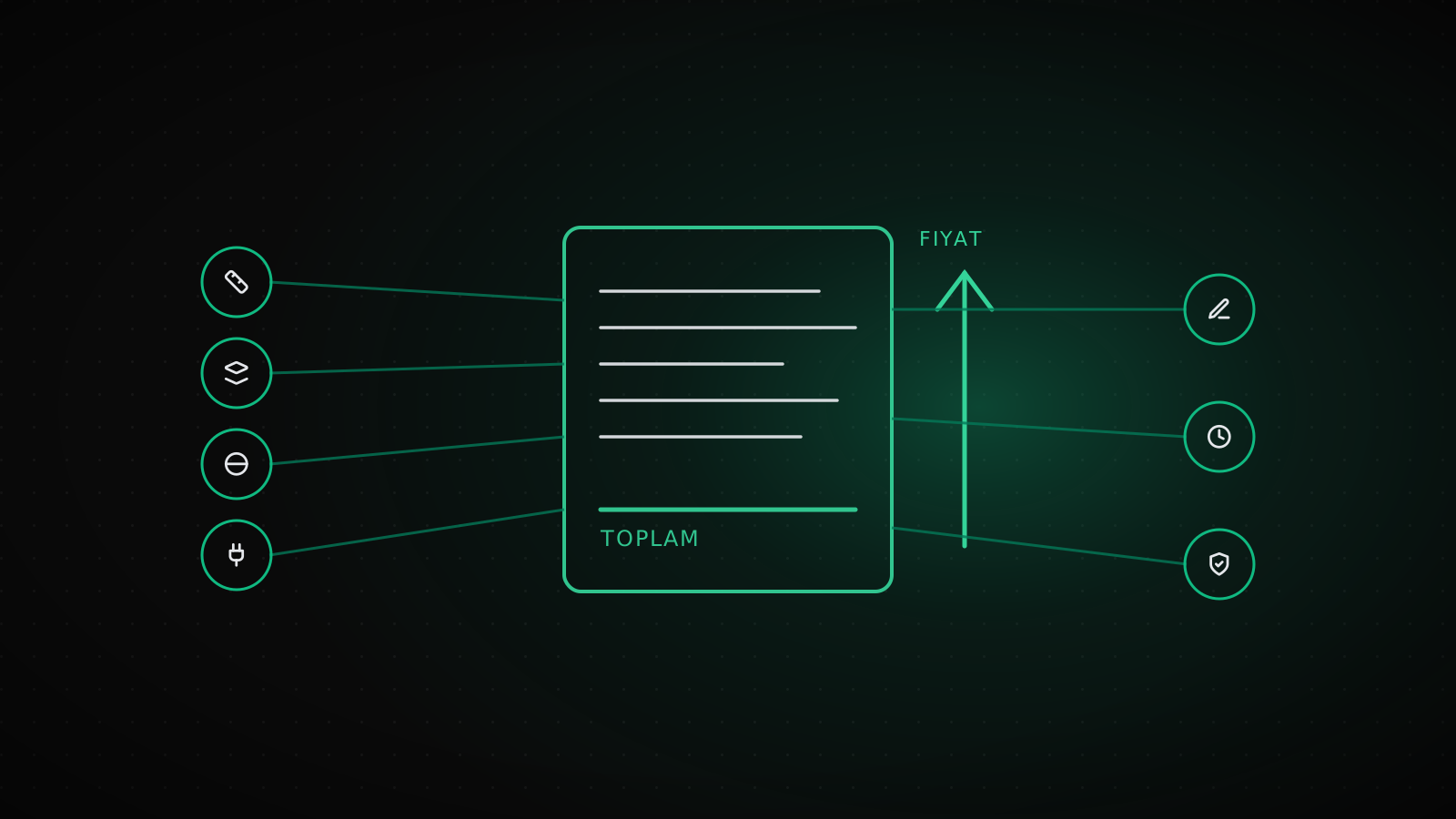
Send the same brief to three agencies and the quotes will not agree, because the number is not set by scope, it is set by how clearly that scope was defined. Seven items actually shape a corporate website quote in 2026: where the scope stops, page count and page type, how many languages it ships in, which systems it connects to, who writes the content, how compressed the delivery timeline is, and who owns it after launch. For a tier-by-tier breakdown of what a given budget buys, our corporate website pricing guide covers the packages; this piece covers what pushes any package's number up.
Summary
Seven cost drivers: scope definition, page count, language count, integration complexity, content ownership, delivery timeline, and post-launch care. Two quotes for the same page count can still differ by more than half once one of these seven is defined differently.
Seven factors, their pull on price
Where does scope actually stop?
The first thing to pin down before requesting a quote is the edge of the scope. "Corporate site" means a project portfolio and a quote form for a construction firm; it means a store with variant management for an apparel brand. When scope is not written down, "let's add this too" requests pile up during the build, and each one opens its own line item.
Stack choice is part of scope, not a separate technical footnote. WordPress or Next.js changes both the build cost and the ongoing maintenance load; our WordPress vs. Next.js decision matrix walks through how to make that call.
A healthy quote writes scope as a list: page count, languages, integrations, approval rounds. If scope fits in one sentence, the price is only as precise as that sentence.
How does page count double the price?
Cost does not rise in a straight line with page count, it rises in steps. Every new page TYPE (a product page, a doctor profile, a dealer portal) needs its own design and content pass; it is not a copy of an existing template. Going from five pages to eight is usually a normal step up; going from eight to fifteen gets priced like a second project.
For construction firms this shows up as an ever-growing list of ongoing and completed project pages; for clinics it shows up as doctor and treatment pages multiplying faster than planned.
Real numbers
Mantra Yapı (construction, portfolio-led corporate site)
87 / 92
Lighthouse desktop performance / SEO score
Respect Elektrik (electrical contracting, quote flow)
88 / 92
Lighthouse desktop performance / SEO score
Both sites kept scope tight and both still land near 90 on technical SEO; a scope that keeps growing tends to eat performance first, SEO score second.
What does going from one language to several really cost?
A second language does not double the content work, it creates something close to a second project: separate copy, a separate SEO title, a separate search intent per page. For export-facing firms an English site is often the first trust signal a foreign buyer sees, so it rarely gets cut; a third language calls for a rewrite, not a translation pass.
The real cost does not come from the number of languages, it comes from whether each one is written to its own search intent. A Turkish page that is a literal copy of the English one reads weak to both the visitor and the search engine.
Which integrations actually inflate a quote?
Integration is the gap between a quote that ends at a contact form and one that connects to a live system. A booking engine and a compliant intake form for clinics, a dealer panel synced to an ERP or marketplace for wholesale and export firms, a payment gateway like iyzico or PayTR for apparel brands: each is its own line item, and each carries its own ongoing testing and maintenance load.
What actually drives the cost up is not wiring the connection, it is anticipating what happens once data starts flowing through it: price conflicts during a stock sync, a webhook that silently stops firing, shipping status that never makes it back to the marketplace. Our guide to fixing Trendyol and Hepsiburada integration errors covers the durable fix for exactly these scenarios.
Who writes and supplies the content?
Who owns copy and images is the line item a quote most often leaves vague. Agency-written copy is an invisible but real share of the budget; a company that supplies its own text and photography gets the same scope at a lower number.
Apparel brands usually already have product photography, clinics already have doctor bios, construction firms already have project photos. Supplying those yourselves instead of asking the agency to produce them is the fastest place to trim a quote.
What does compressing the delivery timeline cost?
Asking for the same scope faster is never free. A compressed timeline means a team working in parallel, or working nights and weekends, and that usually shows up as a separate rush line on the quote.
A more realistic alternative is holding scope fixed and flexing the date instead: launch with the core pages in phase one, add the rest in phase two. That protects both the budget and the calendar.
Why does the post-launch care line keep getting left out?
Most quotes price the work up to launch and stop there. A site needs security updates, performance monitoring, and small fixes after it goes live; if nobody owns that, the site slows down or accumulates security gaps within a few months.
A quote with no care line is not a cheaper quote, it is a quote that moves that cost to a later, separate invoice.
A script for pressure-testing any quote
The seven questions below map one-to-one to the seven items above. Run through them before signing anything.
Quote interrogation script
Is scope written down, line by line?
Healthy answer: a scope document exists; anything extra is a separate quote.
Red flag: scope fits in one sentence, with "as needed" somewhere in it.
Is the page count fixed by type, not just by number?
Healthy answer: each page type is named, with its own design pass.
Red flag: "about 8 pages" with no list of what they are.
Does every language get its own content, not a translation?
Healthy answer: each locale has its own keyword and copy pass.
Red flag: "we'll translate it after" with no separate budget line.
Is each integration priced, tested, and owned individually?
Healthy answer: each system (booking, ERP, payment) has its own line and a named owner for failures.
Red flag: integrations are bundled into one vague "technical work" line.
Is it clear who supplies copy and images?
Healthy answer: the quote states exactly what the agency writes versus what you provide.
Red flag: "content" is one unexplained line with no owner.
Does the timeline match the scope, or was it compressed?
Healthy answer: a phased plan, or a rush fee stated as its own line.
Red flag: an aggressive date with no mention of what that costs.
Is post-launch care included, or silently absent?
Healthy answer: a named monitoring and maintenance line, even a small one.
Red flag: the quote ends at "launch", full stop.
| Factor | Keeps the price down | Pushes the price up |
|---|---|---|
| Scope | Written, line by line | One vague sentence, "as needed" |
| Pages | Fixed page types, phased growth | Open-ended, growing mid-build |
| Languages | One language at launch, add later | Three languages translated, not rewritten |
| Integrations | One system, tested end to end | Several systems bundled as "technical work" |
| Content | Client supplies copy and photos | Agency writes and shoots everything |
| Timeline | Phased launch, realistic date | Compressed date, same scope |
| Care | Named monthly maintenance line | No line, cost appears later |
Is all of this always necessary?
If a simple one-page presence is enough and there is no growth plan behind it, this level of scope discipline is overkill; a small, fixed-scope quote will be faster and cheaper. These seven factors matter most once page count, languages, or integrations start adding up.
Once scope is clear and you are ready to request a quote, the corporate website solution page is where to start a scope document and a proposal.
Frequently asked questions
What raises a corporate website's price the most?
Rarely one factor alone: it is usually the combination of an undefined scope, a page count that grows mid-build, and a rising number of integrations.
What happens if a quote has no care line?
The site launches, but nobody is watching for security updates or performance drift; within a few months that tends to surface as an urgent, separate invoice.
How much more does a bilingual site cost than a single-language one?
There is no fixed ratio, since it depends on content volume, but each added language needs its own writing and its own search intent, so it should be budgeted close to a separate project.
Can page count be increased later?
Yes. Holding scope fixed for phase one and adding new page types in phase two keeps both budget and timeline predictable.
Is a theme-based build cheaper than a custom one?
Cheaper at the start, but brand differentiation and later integrations get harder and more expensive to retrofit; the WordPress vs. Next.js decision matrix covers that trade-off in detail.