
Why web agencies charge for "one small change" after launch
Why a single post-launch edit gets its own invoice, and how a monthly care plan turns that risk into a fixed hour budget, with real LumiCare numbers.
A project ships, the invoice closes, the work reads as finished. Three weeks later a request to add a tab to the menu, or update a phone number on the homepage, comes back with a new quote attached. The reason is structural: delivery contracts usually carry a hotfix warranty of up to 30 days, and once that window closes, every change carries its own testing, deployment and rollback risk. A monthly care plan turns that risk into a fixed hour budget; without one, every request carries its own invoice.
Summary
Post-launch warranty typically runs 30 days. After it closes, every change, however small it looks, gets billed separately because it carries its own test-deploy-rollback risk. A monthly plan like LumiCare turns that into a fixed hour budget: plans start at €149/month, with a 10% discount on annual billing, and the Plus plan includes 2 development hours a month.
What actually changes after delivery
Most delivery contracts carry a hotfix warranty of 30, sometimes 45, days. Bugs that surface in that window, something the build missed, a layout that breaks in one browser, get fixed at no charge, because responsibility still sits with the team that shipped it. Once the warranty closes, the project counts as finished and the code is no longer under active care.
Every request after that point, regardless of size, reopens a line item: find the right file, make the change, test it, deploy it, and keep it reversible if something breaks. This site's own content pipeline runs the same discipline: a new guide touches exactly two files, and nothing ships until the build and the type check both pass clean.
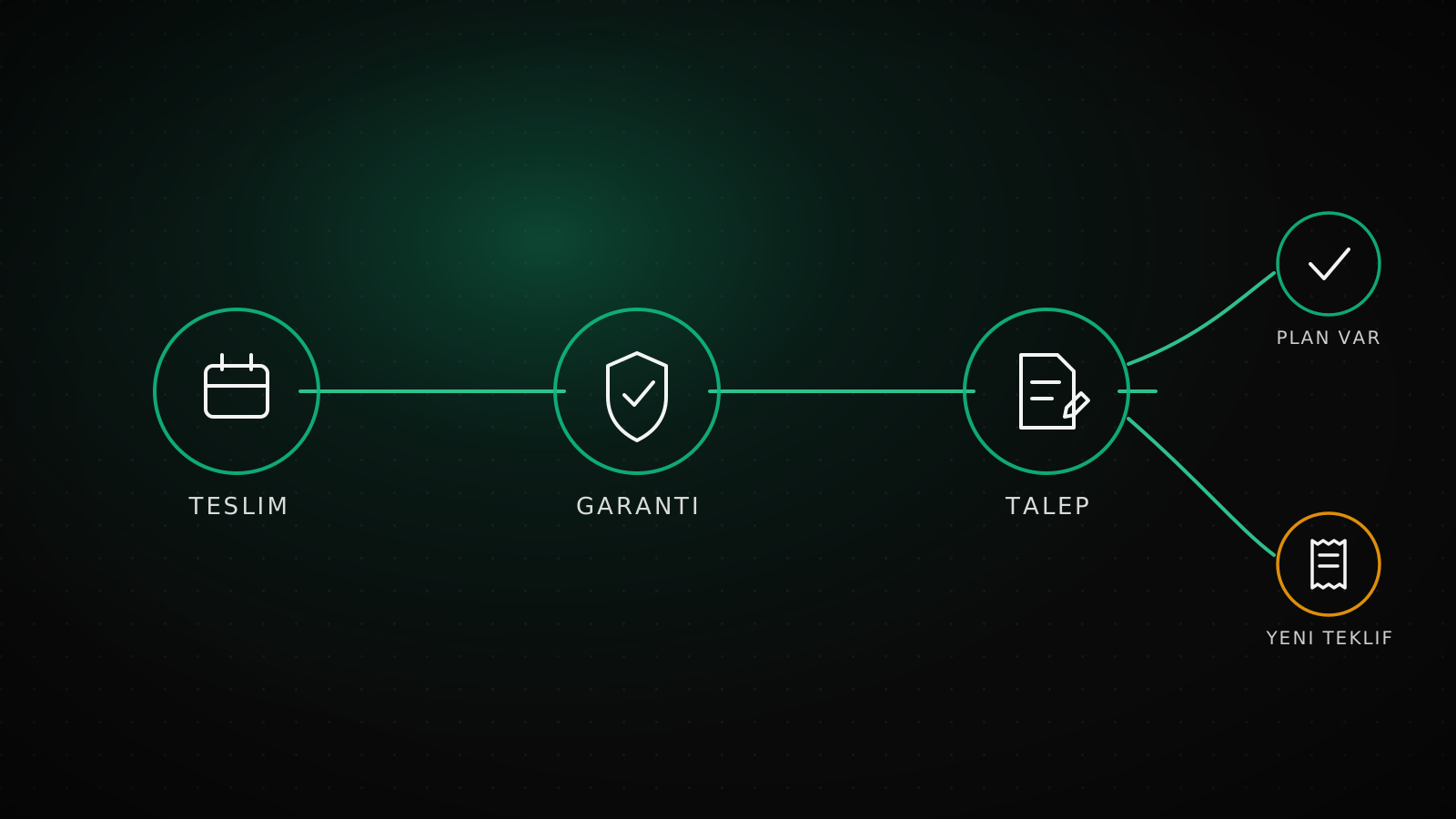
The route from delivery to a billing decision
1. Delivery
A 30-45 day hotfix warranty starts.
2. Warranty
Once it lapses, the project counts as finished.
3. New request
A menu tab, a text edit, an image swap arrives.
4. Decision
A plan draws it from the hour pool; no plan means a new quote.
How long does "one small change" actually take
On the client's side the request can look like a one-line text edit. On the agency's side the same request runs through six steps:
- Understand the request correctly: which page, which language, which screen size.
- Find the right component in the code, a step that gets longer as a site grows.
- Make the change in both locales together; leaving one language behind is half a job.
- Test it locally to confirm nothing else on the page broke.
- Deploy it and confirm it live.
- Stay ready to roll it back if something goes wrong.
Those six steps turn what looks like five minutes of work into something closer to 30-60 minutes on the agency's side. The invoice reflects that process, not the length of the edited sentence.
What a quote looks like without a care plan
Without a monthly plan, every request carries its own invoice: either an hourly rate or a fixed per-request minimum. The minimum exists because the fixed cost in those six steps, understanding the request, preparing the environment, shipping it, stays the same no matter how small the change looks. "I just need one sentence changed" still gets billed against that same one-hour minimum.
Our guide to what actually determines corporate website pricing covers why this exact line item gets left off most quotes in the first place: post-launch care is the cost that moves to a later, separate invoice.
Where LumiCare's hours actually go: a measured breakdown
Lumiasoft's LumiCare care plan starts at €149 a month, with a 10% discount on annual billing. It carries a 99.5% uptime SLA and a 2-4 hour response commitment on critical issues; the Plus plan includes 2 development hours a month. Those two hours work as a pre-purchased pool instead of re-billing the six steps above every single time.
Where the Plus plan's 2 monthly hours go
These three bands are a practical reference, not measured telemetry. A 2-hour monthly pool realistically covers 4-6 text or image updates a month, or one to two medium-sized changes.
Which requests stay inside the warranty
The line is not always obvious, but the rule is simple: a bug that traces back to the original build stays covered. A new request does not.
Covered
- A bug traced back to the original build
- Security patches and uptime monitoring
- A small content change inside the plan's monthly hour pool
Gets its own quote
- A new page or section
- A new integration or third-party API change
- A structural design change
How to read a monthly maintenance budget
Whether the quote comes from Lumiasoft or another agency, a reasonable maintenance proposal itemizes five things separately. Our corporate website pricing guide shows where this exact line sits inside each delivery tier.
| Line item | Why it exists | Question to ask |
|---|---|---|
| Uptime monitoring | An outage can run for hours before anyone notices | How and how fast am I told about downtime |
| Updates and rollback | Every update carries a risk of breaking something | What's the rollback time if an update breaks the site |
| Backup and restore testing | A backup that's never been restored is not a backup | When was the last restore actually tested |
| Performance and security scans | A slowing or exposed site quietly loses customers | How often do scans run, and how are results reported |
| Reporting and SLA priority | Unclear ownership means nobody moves first | Is the response time for an urgent request written into the contract |
Our site speed comparator lets you run a version of that performance check yourself before asking a vendor for theirs.
When a care plan genuinely isn't needed yet
Not every site needs a monthly plan. A five-page static corporate site with no active campaign and content that changes a few times a year is often over-served by a monthly plan. An annual security scan plus hourly support when something comes up is usually enough.
A care plan earns its cost for businesses that touch the site regularly: adding a new product or project page, running a campaign, or running an integration with a marketplace or an ERP. Counting the actual requests made in the last six months usually settles which side of that line a business sits on.
Past two or three requests in that window, reviewing a LumiCare plan tends to cost less than billing each one separately.
Frequently asked questions
Does the first request after the 30-day warranty get billed automatically?
Yes. Every request after the warranty date, including the first one, gets evaluated on its own. On an account with a care plan it draws from the hour pool; without one, it turns into a new quote.
Is hourly billing or a fixed plan the better call?
A business sending one or two requests a month is usually fine on hourly billing. Past three requests a month, a fixed plan tends to cost less than paying the per-request minimum each time.
Do unused plan hours roll over to the next month?
No. LumiCare's Plus plan hours do not carry over; the plan works as a fixed monthly development budget layered on top of the monitoring and security coverage, not a banked balance.
How does an urgent outage get handled without a care plan?
Regardless of which provider caused it, an account without a plan usually has to agree on scope and cost before work starts. An SLA-backed plan reverses that order: response starts within 2-4 hours, and the cost is already covered by the plan.
Does a care plan move with you if you switch agencies?
No. A care plan covers the relationship, not the site itself. A new team takes over the existing infrastructure and defines its own maintenance scope from there.