
How many days does it take to deliver a corporate website
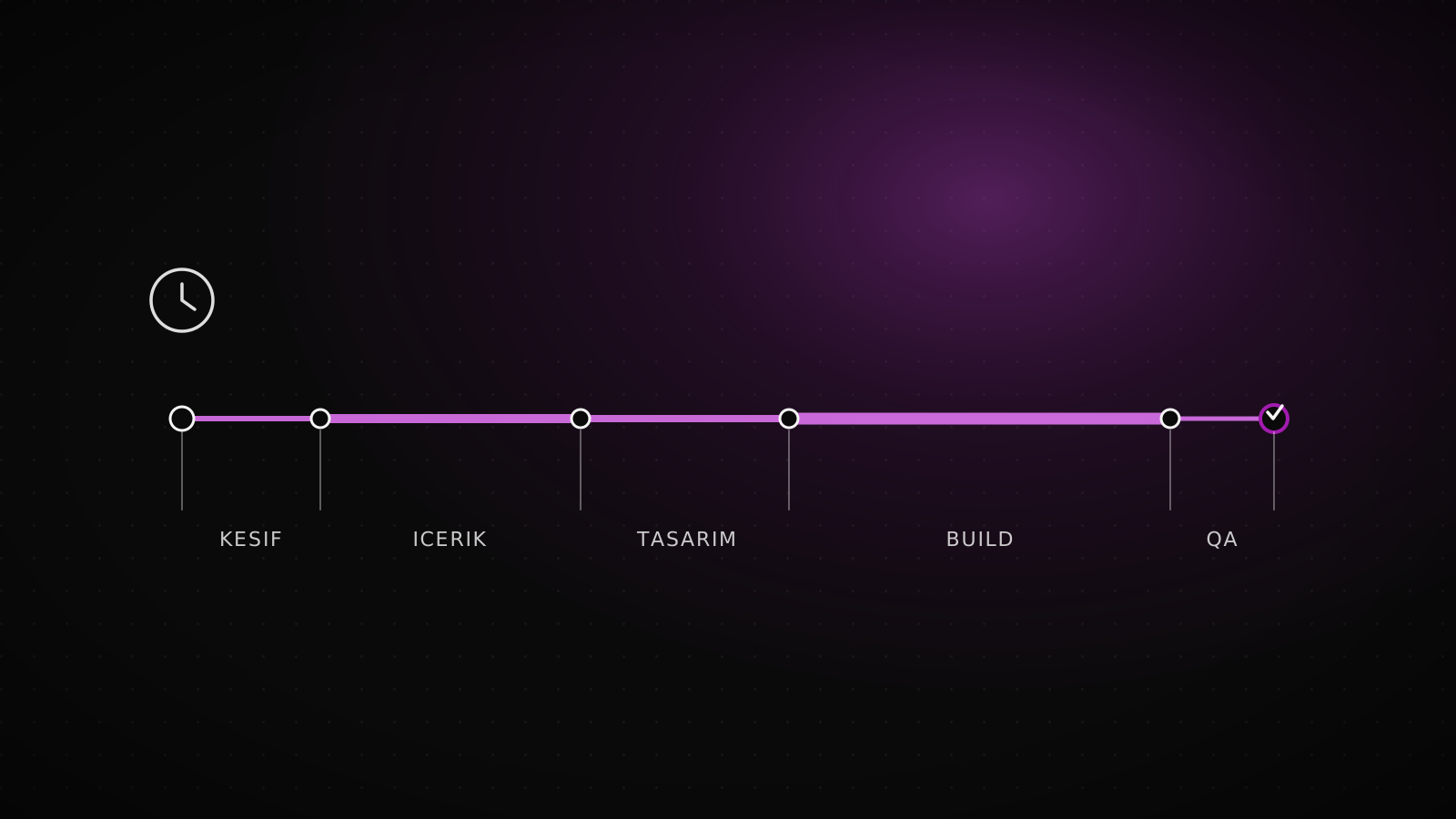
The five phases that set a corporate website's real timeline, what actually extends it, and the questions to ask before trusting a quoted delivery date.
A corporate website project, once the scope is fixed, typically ships in 20 to 40 working days, roughly four to eight weeks. The range is wide on purpose: the number that matters is not the page count, it is how fast the client side delivers content, how many approval rounds the design goes through, and how much integration work sits behind the launch button.
Summary
A standard 5-8 page corporate site moves through five phases: discovery, content, design, build and integration, QA and launch. Each phase has a realistic day range, and three factors routinely push the total past it: late content delivery, extra approval rounds, and integration scope agreed after the quote. A delivery date quoted before scope is fixed is an estimate, not a commitment.
Why one number never answers this question honestly
Two corporate website projects with the same page count can finish two weeks apart. The difference is rarely the build itself. It is whether the client has photos and copy ready on day one, how many people need to approve the homepage design, and whether the site needs to talk to a CRM, a payment provider or an ERP system. An agency that names a single day count before any of this is known is quoting a hope, not a plan.
Five phases, five realistic day ranges
The work breaks into five phases that run mostly in sequence, with some overlap between design and content once the structure is agreed.
Standard scope, 5-8 pages
Discovery
3-5 working days. Sitemap, page list, who approves what.
Content
5-10 working days. The client-side step, and the one that slips most.
Design
5-7 working days. Scales with how many approval rounds are allowed.
Build + integrations
7-15 working days. CMS, forms, and anything that must talk to a CRM or ERP.
QA + launch
2-4 working days. Performance, mobile, forms, and tracking checked before go-live.
Ranges are typical for a 5-8 page scope with no multilingual or ERP/CRM requirement. Multilingual builds and ERP-connected sites add to phases 2 and 4.
The QA phase produces a concrete, checkable result, not a feeling that the site is "ready." On a corporate site built for Mantra Yapı, a construction firm, this step closed with a Lighthouse score of 87 on desktop and 92 for SEO, measured before launch, not after a complaint.
Three real reasons a timeline runs long
What actually pushes the date
Late content
A one-week delay in photos or copy moves build and QA back by the same week, day for day.
Extra approval rounds
Every stakeholder added to design sign-off after the kickoff adds a review cycle, not a day.
Integration added after the quote
A CRM or ERP connection agreed mid-project reopens the build phase from the point it was scoped.
Three questions to ask before trusting a quoted date
A delivery date is only as real as the scope behind it. Three questions separate a real estimate from a sales number: which exact pages and page count is this date tied to, does it already include the approval rounds you expect to use, and does it account for any CRM, ERP or payment integration you have mentioned, even in passing. An agency that answers all three in writing is quoting a plan. One that answers with a single day count and no scope attached is quoting a guess.
When this estimate stops being realistic
These ranges hold for a standard corporate site with a defined page count and no exotic integration. They do not hold for a from-scratch e-commerce catalog, a multi-step booking engine, or a site waiting on a brand identity that does not exist yet; each of those resets the discovery phase before anything else can start. If the real blocker is an approval process inside your own company, no agency's calendar fixes that, and the honest move is to fix the approval chain first and re-quote after.
Frequently asked questions
An agency's quote says two weeks. Is that realistic?
Only if it is tied to a fixed page count and a defined integration list. A day count given before scope is fixed is an estimate, not a commitment, and should be treated as one.
What happens to the timeline if we deliver content late?
Content is usually the phase that slips most. A delay there pushes build and QA back by the same amount, because both phases need finished copy and images to start.
How much time does a multilingual or ERP-connected build add?
Each additional language roughly doubles the content and QA phases. A CRM or ERP connection typically adds one to two weeks to the build phase, depending on how clean the source data already is.
Is it a bad sign if an agency won't give a single day count upfront?
The opposite. An agency that gives a firm number before seeing the scope is taking a guess that someone has to absorb later. A range offered after a scoping conversation is the more reliable signal.
Getting a real, scope-based timeline starts with a conversation about what the project actually includes, not a number traded by email. The corporate website service page is where that scoping conversation starts. What actually drives the price for the same scope is covered in the 7 factors that set a corporate website's price, and the domain and corporate mail setup that needs to land before launch is covered in setting up a .com.tr domain and corporate email.
Let's talk about what you want built.
Tell us what you want to build and we will work the scope out together.
Ask an AI about Lumiasoft
The question is ready. Let the tool read the site and answer for itself.


