When Bolt.new Deletes Your Project: Real Recovery Paths and How to Never Need Them Again
Deleting a project in Bolt.new is permanent, but most 'lost' projects were never deleted. Which recovery path works for which case, and what to set up so it never happens again.
Deleting a project in Bolt.new cannot be undone. Bolt's own support documentation is direct about it: deleting a project permanently removes the project and all its data, including chat history, project files, and the database. In practice, though, most "my project disappeared" complaints aren't actual deletions. They're the wrong workspace or the wrong account. This piece separates three distinct situations, names which recovery path actually works for each, and covers what to set up so you never have to read an article like this again.
Summary
A deliberate, confirmed project deletion in Bolt.new is permanent and Bolt cannot bring it back. Most "lost project" reports are something else: a different workspace, a different signed-in account, both of which are recoverable. If the project still opens but files look wrong, version history gets you back. If you truly can't find it anywhere, support@bolt.new and your StackBlitz account are the last resort. The real fix is upstream: two-way GitHub sync plus a routine local export.
Is it actually deleted, or does it just look that way
This has to be the first question, because the answer changes everything about what to do next. A "missing project" in Bolt is one of three different things, and two of them are less bad than they feel.
Three situations, three different outcomes
You opened project settings, clicked delete, and confirmed it
Permanent. Not recoverable. Skip to the deletion section below.
It's missing from your project list, but you never deleted it
Likely recoverable. Check your workspace and account first.
The project opens, but files are missing or broken
Recoverable. Version history is built for exactly this.
If you confirmed the deletion, Bolt won't bring it back
Bolt's documentation doesn't hedge here: deleting a project permanently removes the project and all its data, including chat history, project files, and the database. Once you've confirmed that action, there's no undo button on Bolt's side, and support can't reverse it either, because the underlying infrastructure treats it as final.
Real users have paid for this the hard way. On Reddit, one user described paying $200 on Bolt.new and losing access to their project (source: r/boltnewbuilders). It's one account, not a pattern proven at scale, but it makes the point: "permanent" means permanent, and the cost of learning that lands on more than just one person.
There's exactly one useful direction from here, and it isn't recovery. It's the prevention setup further down this page.
If the project still opens but files look wrong, version history is the fix
This is a different failure than deletion: something got overwritten, not removed. Bolt automatically keeps backups of projects as you build. The clock icon in the top menu opens version history, a visual timeline of those backups where you can browse, preview, label, and restore any earlier point.
Restoring works two ways: pick a version from history, preview it, confirm with "Restore this version." Or scroll back through chat, preview a past message with the eye icon, and restore it with the return-arrow icon. One detail Bolt's own docs are explicit about: restoring an earlier version does not touch your current Bolt or Supabase database. Code rolls back; the database stays where it is. They're separate layers.
If you can't find it anywhere, check your account before you give up
The project doesn't say "deleted," doesn't show up in version history, and you still can't see it. Bolt's support documentation names two common causes: you're in a different workspace than the one the project was created in, or you're signed into a different account than the one that owns it.
- Click your account name in the left sidebar and see which workspace carries the checkmark.
- Check which email you're signed in with, and sign into the right one if it's wrong.
- Bolt runs on StackBlitz's infrastructure: sign into StackBlitz, open Collections in the left menu, and check the Bolt collection.
If none of that surfaces it, the last step is support@bolt.new. Write from the email address you used to create the project, and include the project name or URL if you have it.
Three recovery paths, side by side
One table for which path applies to which situation.
| Path | When it works | Its limit |
|---|---|---|
| Version history | Project still exists, files got overwritten or broken | Covers code, not the database |
| Workspace / account / StackBlitz check | Project sits in a different workspace or account | Doesn't help if it's genuinely deleted |
| Support (support@bolt.new) | Last resort when nothing above finds it | Cannot restore a confirmed deletion |
Set this up so you never need this page again: GitHub sync and routine exports
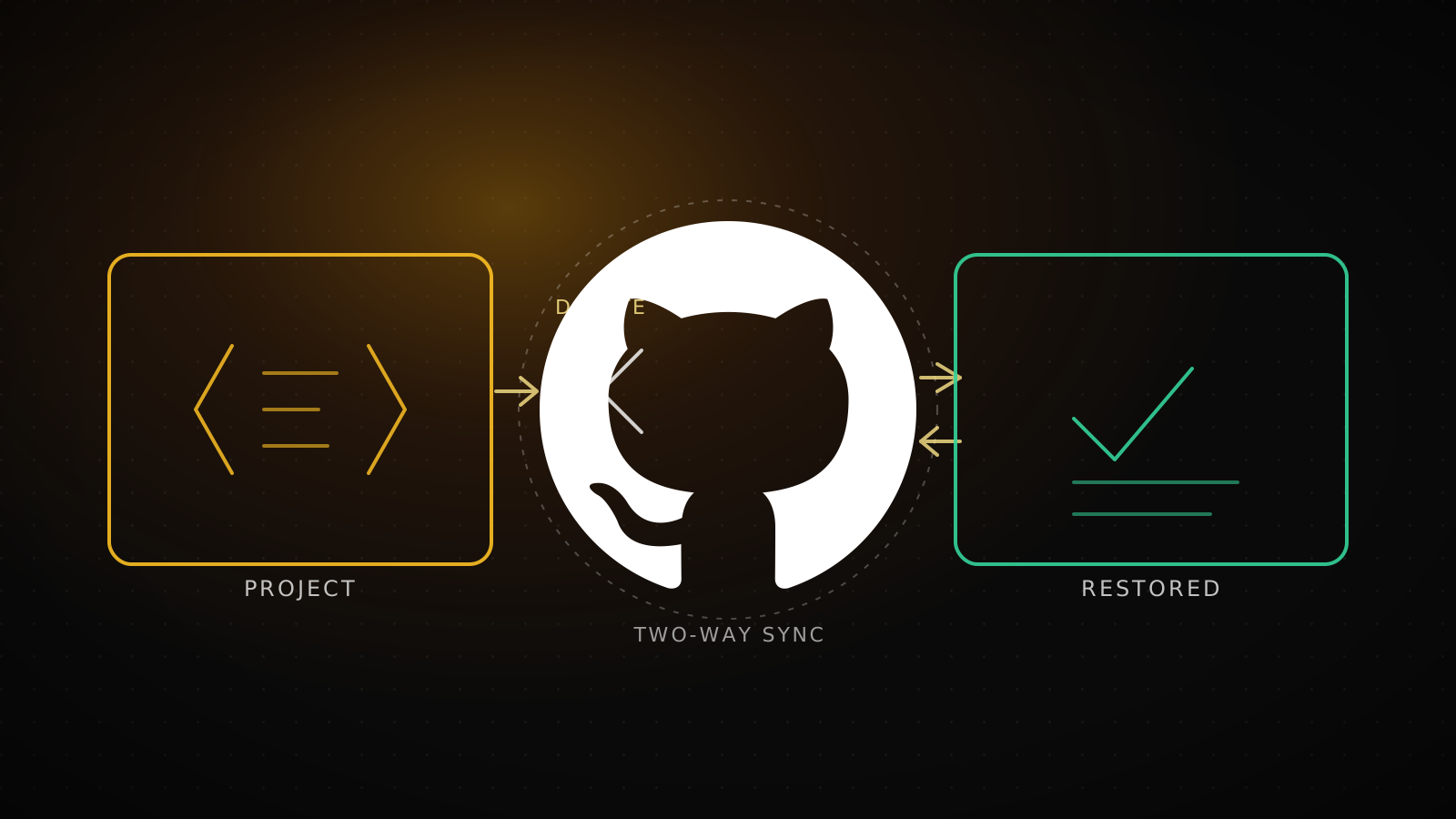
Bolt's GitHub integration is more than a one-way backup, it's two-way sync. Bolt saves your work automatically and checks GitHub every 30 seconds for changes made outside Bolt. That means if the project ever gets deleted inside Bolt, the repository on GitHub keeps standing on its own.
Use an individual GitHub account
Organization accounts need a separate setup path.
Click the GitHub icon in the top-right of your project
Name the repository and confirm "Create repository." It starts private, on the main branch.
Authorize the connection
Log in, click Authorize, install the GitHub App, and choose all repositories or only selected ones.
Know who manages it
Only the project owner sees the GitHub icon. Collaborators' changes sync the next time the owner opens the project.
GitHub sync isn't mandatory, but it's the cheapest insurance available. A second layer costs almost nothing: at the end of a session, open the project title, go to Export, and click Download for a zip. Running it locally just needs Node.js and npm install && npm run dev.
This risk isn't unique to Bolt
The same panic shows up on Lovable and Replit, for different reasons, with the same ending: our piece on what happened when Replit's agent deleted a production database has a completely different root cause, but the lesson matches, backups and sync have to be in place before the deletion, not after. On the Lovable side, we've covered how to get your code out in exporting Lovable code to GitHub.
When you can handle this yourself, and when you need to call for help
Everything above is doable without technical background. It gets bigger when either of two things is true: the project is live work for a paying client and the loss happened quietly, or what you managed to recover is a patchwork of code nobody's reviewed for security.
If you want a faster read on which situation you're in, our build-it-yourself-or-hire calculator answers that in a few questions. If the code is recovered but nowhere near production-ready, our AI project completion process starts exactly there: read what exists first, then move it forward.
Frequently asked questions
Does a deleted Bolt.new project ever come back?
A confirmed, deliberate deletion is permanent, Bolt does not restore it. A project you simply can't see is different, check your workspace and account first.
How far back does version history go?
Bolt's own documentation doesn't state a retention window or a hard limit. If you're mid-project on something critical, don't wait to export.
Is connecting GitHub free?
The documentation doesn't tie the GitHub integration itself to a paid plan; an individual GitHub account is what it requires.
I downloaded the export, now what?
Unzip it, make sure Node.js is installed, then run npm install && npm run dev inside the folder to bring the project up locally.
I emailed support, how long until they respond?
Bolt's documentation doesn't give a response time. Writing from the account email you used to create the project, with the project name or URL attached, speeds up the search on their end.