
Udemy commission and your own course platform: when the math works
Udemy's commission is not one number, it is four. We break down which one actually applies to you and when leaving for your own platform pays off, sourced straight from Udemy's own pages.
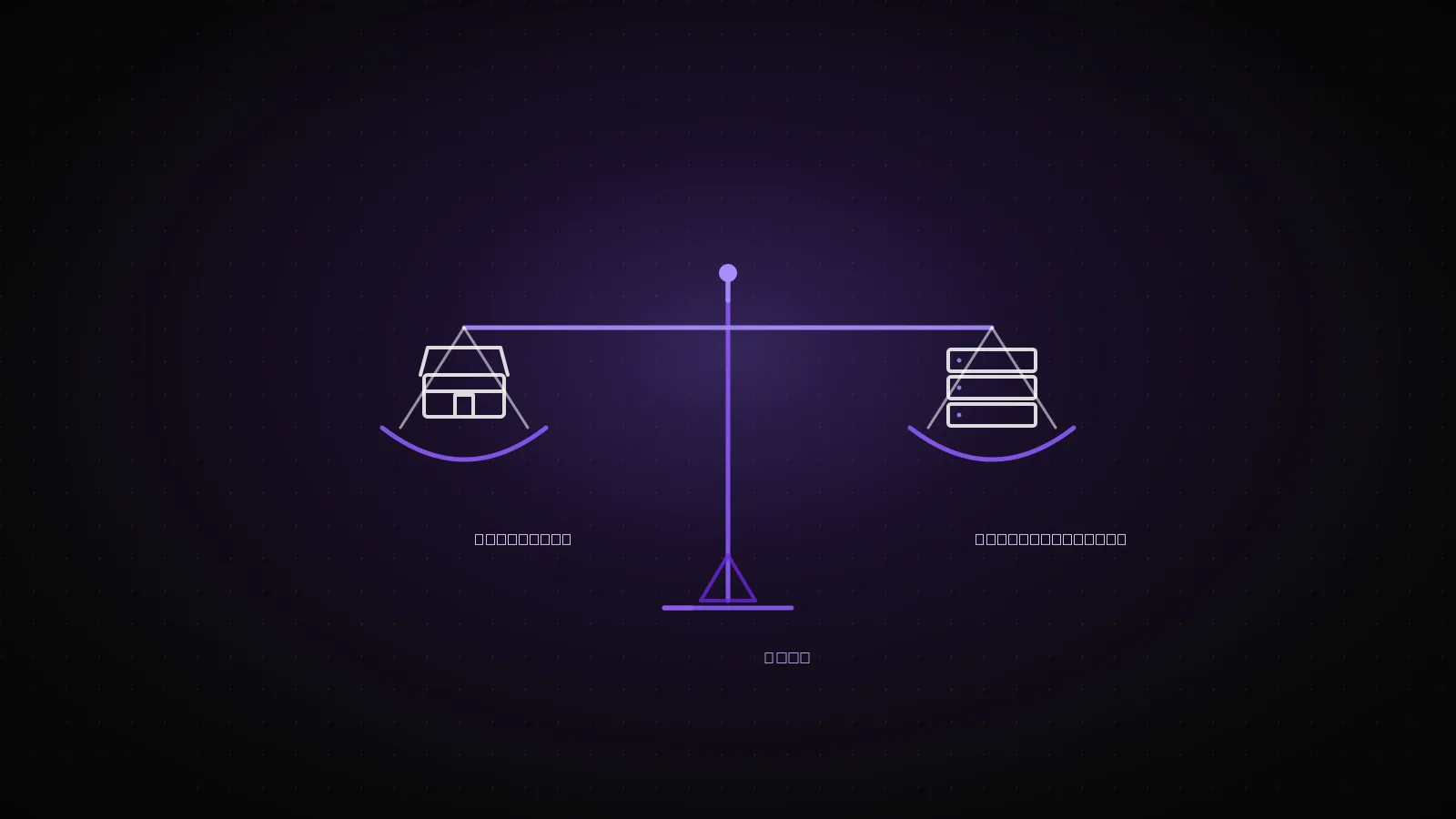
Udemy's own support page does not quote one commission rate, it quotes four: 37% on an organic marketplace sale, 97% on a sale through your own coupon or referral link, 25% on a sale Udemy's own ads drove, and 15% from the Udemy Business subscription pool as of 2026. Most instructors carry the 97% figure in their head, but most real sales run through the 37% tier. This piece shows exactly which rate applies when, what actually changes when you run your own platform alongside Udemy, and at what point that math starts paying off.
Summary
The marketplace brings traffic but keeps 63% of most organic sales. Your own platform removes that cut but hands you the traffic, the payment stack, and the support desk instead. The threshold is not set by your revenue, it is set by what it costs you to replace Udemy's discovery with your own.
Four different commission rates, and which one hits you
Udemy attributes every sale to a channel and pays a different share depending on which one closed it. The rate that shows up in your payout report is not a single policy, it is whichever row below matched that sale.
| Sale channel | Instructor share | Who brought the buyer |
|---|---|---|
| Organic marketplace | 37% | Udemy's own search and recommendations |
| Your own coupon or referral link | 97% | You |
| Udemy's own paid ads | 25% | Udemy's ad spend |
| Udemy Business subscription pool | 15% (2026) | Watch-minute share of the monthly pool |
Source: Udemy's own instructor revenue share page, checked August 26, 2026. The 97% figure is the one Udemy markets hardest to instructors, but it only applies when the buyer arrived through a link you generated yourself. A buyer who searched the marketplace and clicked your listing organically, by far the most common path for a course with no outside following, pays out at 37%.
Why the subscription share keeps shrinking
The marketplace rate has stayed at 37% through 2026. The Udemy Business pool has not: it has shrunk every year since 2024, and instructors leaning on subscription revenue are earning a smaller slice of the same pie each cycle.
Udemy Business instructor pool, year over year
Source: Udemy's own announcement, teach.udemy.com, "Updating subscription terms", and support.udemy.com on Business/Personal Plan revenue.
None of these terms are something you negotiated. That is not a complaint, it is the actual shape of the risk: on a marketplace, the split can move on Udemy's schedule, not yours. A platform you own does not remove that kind of risk, it just moves whose schedule it runs on.
What the marketplace is not sharing: your student list
Udemy owns the account. You do not get a student's email, cannot message them outside the platform's own tools, and cannot see who is enrolled beyond the dashboard Udemy gives you. Every relaunch, every new course, every upsell starts from zero, because you never captured the list Udemy captured for you.
That is the real trade a marketplace makes: it hands you discovery and takes the relationship. For a first course with no audience, discovery is worth far more than the relationship you have not built yet. For a fifth course from someone with a following, the relationship is the asset, and the marketplace is charging 63% to withhold it.
What your own platform earns you, and what it costs
Running your own platform changes four things in your favor: you set the price and the discount policy instead of Udemy's own sale calendar, you own the student's contact and can sell them the next course directly, you can package courses into bundles or a subscription on your own terms, and the brand on the checkout page is yours, not a marketplace listing among thousands.
- Price and discount policy: no more surprise 90%-off flash sales you did not choose.
- Student relationship: an email list you can remarket to for the next launch.
- Packaging: bundles, cohorts, subscriptions, none of which the marketplace's single-course model supports well.
- Brand: your domain, your checkout, not a listing next to a hundred competitors.
It also hands you three jobs Udemy was doing for free: generating your own traffic, running payments and video hosting, and handling support tickets yourself. Setup cost for a platform like this scales the same way any custom build does, by page count, membership logic, and integrations, which we break down in our corporate website pricing guide.
The threshold: what revenue makes the switch pay off
Run the same 40 sales at a 500 TL price point through both channels and the gap is concrete, not abstract.
Worked example: 40 sales/month at 500 TL
Marketplace, organic sale
7,400 TL/mo to you
12,600 TL goes to Udemy, a 63% cut
Your own platform
20,000 TL/mo gross
Minus a payment processor fee, typically a low single-digit percentage, and hosting, which varies by provider
Illustrative numbers, not your numbers. The one cost this table leaves out on purpose: what it takes you to generate 40 buyers a month without Udemy's search traffic doing it for you. That cost is real even though the marketplace never itemizes it.
The threshold is not a revenue number, it is a traffic-cost number. If replacing Udemy's organic discovery with your own list, SEO, or paid acquisition costs you less per sale than the 63-point gap, the switch pays off. If you have no channel of your own yet, the marketplace's cut is the price of the audience you have not built.
Off-the-shelf course platform or a custom build
Hosted course platforms exist as their own SaaS category: monthly fee, built-in video hosting, a checkout that works day one, and you are live in a week. They still take a payment processing cut and a monthly fee, just a far smaller one than a marketplace's commission, and you inherit their feature ceiling, not yours.
A custom build removes that ceiling: membership tiers, role-based access to specific content, an integration with the CRM or automation you already run. It costs more upfront and the maintenance is yours going forward, not a SaaS vendor's. This is the same build-versus-buy call every gated-content platform makes, whether it is a course, a community, or an internal tool.
Payments, invoicing, and VAT in Turkey
Selling from your own site means integrating a payment provider yourself instead of Udemy handling it inside its own checkout. You will also need to issue proper invoices for a service sale, which for most sellers in Turkey means an e-fatura or e-arşiv fatura setup depending on your registration status, and the standard VAT rate applies to the service, so confirm the current rate with your accountant before you price anything. If you sell to students outside Turkey, cross-border invoicing and currency handling add their own rules, worth checking before launch rather than after your first international sale.
Running both at once: a transition plan
Do not cancel your Udemy courses to force the switch. Keep them live for discovery, and build your own list in parallel: a free preview, a lead magnet, or a community on a channel outside the course content itself, since Udemy's own instructor terms restrict pointing students off-platform from inside a course. Grow your own channel until its sales approach the volume your marketplace courses already deliver, then decide course by course which one is worth migrating fully.
Prototyping this kind of platform quickly with an AI builder is tempting, and it is exactly where these projects tend to crack under real load: membership, role-based access, and real payments are the parts a demo skips. Taking a project like that from a working demo to something that survives real users and real money is the kind of build Lumiasoft takes on daily. There is no packaged course-platform product on our site yet, so this is a scoped conversation, not an off-the-shelf plan.
When staying on the marketplace still wins
If you are launching your first course with no audience anywhere, Udemy's organic search traffic is worth the 63% cut, because your alternative is zero buyers, not a cheaper 37. If the course is a one-off rather than the start of a content business, the overhead of your own platform outweighs anything it would earn you. And if you genuinely do not want to run payments, support, or infrastructure yourself, the marketplace is still doing that job for a price, and that price buys you real time back.
FAQ
What percentage commission does Udemy actually take?
It depends on the channel: 37% goes to Udemy on an organic marketplace sale (you keep 63%), you keep 97% on your own coupon or referral link, you keep 25% on a sale from Udemy's own paid ads, and the Udemy Business subscription pool pays out 15% as of 2026.
How much do instructors earn from Udemy Business?
A share of a monthly pool split by watch-minutes, and that pool has shrunk every year since 2024: 20% in 2024, 17.5% in 2025, 15% in 2026.
When should I build my own course platform?
When the traffic-acquisition cost of replacing Udemy's organic discovery, through your own list, SEO, or ads, is lower than the roughly 60-point gap between the marketplace and your own checkout.
Can I move my Udemy students to my own site?
Not directly from inside a course; Udemy's instructor terms restrict pointing students off-platform in course content. Build your own list through channels outside the course itself, then check Udemy's current instructor terms before promoting anything cross-platform.
Can I sell on Udemy and my own platform at the same time?
Yes, and most instructors who leave do it gradually: Udemy keeps bringing discovery traffic while the owned platform builds the margin and the relationship over time.