
Does ChatGPT bring customers? Where a business stands in AI search results
ChatGPT and Google AI Overview answer customer questions without ever naming most businesses. We measured our own site: zero citations across 96 checks, and the reason is usually structural.
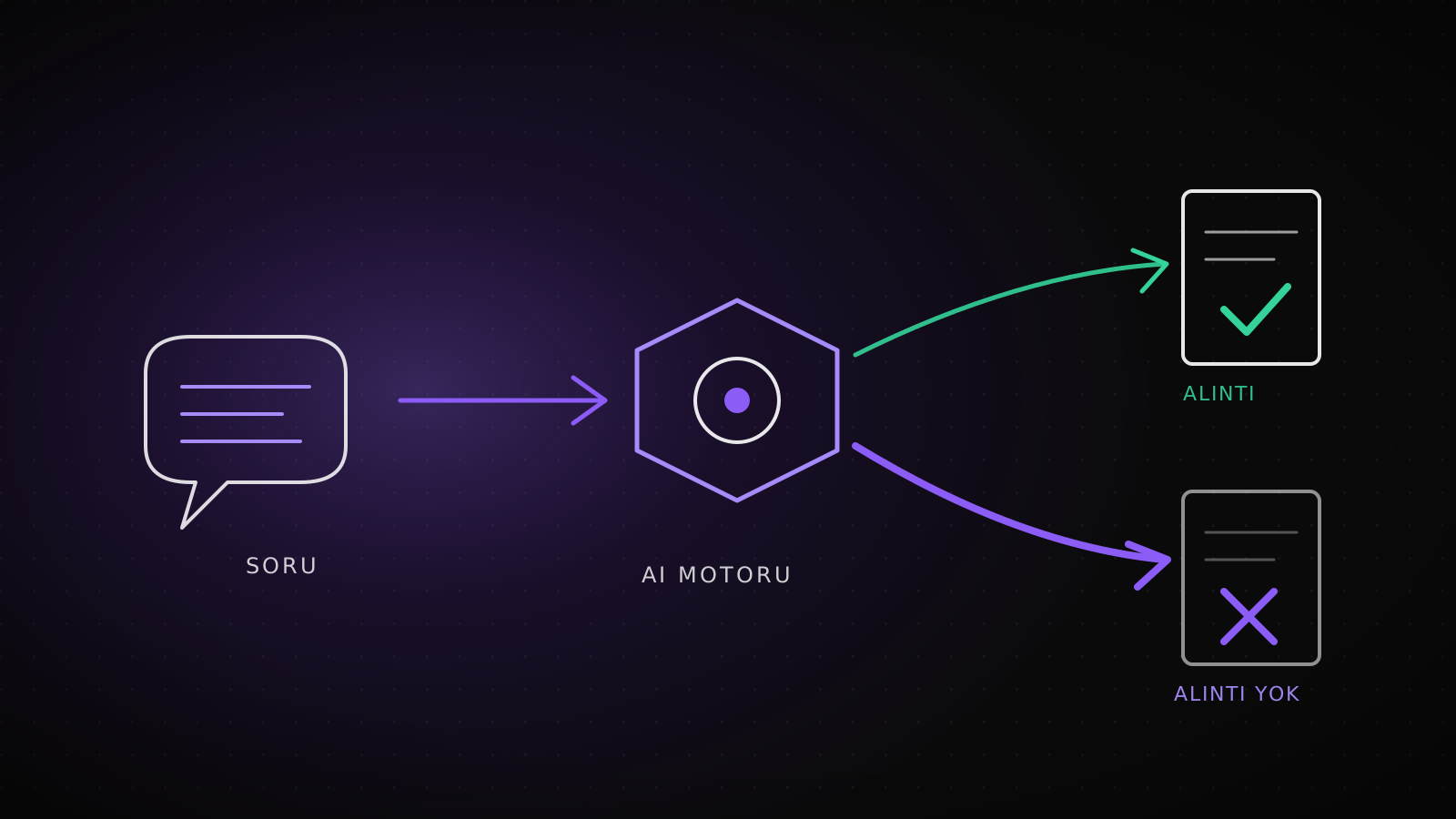
ChatGPT can send a business real customers, but only on one condition first: the AI engine has to name that business in its answer. Lumiasoft measured this on its own site and found almost no naming happens today, zero citations across 96 separate checks. Asking the near-identical question directly produced the same gap: an answer came back, but none of its sources was a focused, data-backed guide. What follows is where that gap comes from and the part of it a business can close today.
Summary
AI engines favor specific, structured and current pages when they generate an answer; generic "about us" pages almost never get cited. Lumiasoft's own measurement returned zero citations across 96 checks, and asking the same question directly surfaced seven sources, none of them a focused guide. Three concrete changes close part of that gap: headings that answer a real question, structured data, and pages that stay current. This is not an equal priority for every business; where search volume is low, another investment comes first.
We measured our own site: zero citations across 96 checks
Lumiasoft runs a regular set of sector-relevant questions through Claude and Google's AI Overview, and logs which sites get named in the answer. The late-October measurement: Claude answered all 31 questions it was asked, and named this site in none of them. Google AI Overview produced an AI answer for 55 of 65 questions, and named this site in none of those either. Mid-September looked slightly different, with one citation out of 50 questions; since early October that number has held at zero.
AI visibility scan, Lumiasoft's own site
Claude: 31 questions
An answer came back for all 31; the site was named in 0.
Google AI Overview: 65 questions
An AI answer showed for 55; the site was named in 0.
Trend: September to October
1 of 50 in September, zero every check since October.
Source: Lumiasoft's own AI visibility tracking, measured 2026-10-27.
This is not a one-site misfortune. The same gap shows up in the live test below.
What makes an AI engine name one site and skip another
An AI engine checks three things before it names a source: whether the page answers the question directly, whether the information is structured in a machine-readable way (schema markup, a clear heading hierarchy), and how current and specific the content is. A generic "who we are" paragraph fails all three, because it never fully answers anything. The technical baseline is a separate gate: a page that loads slowly or breaks on mobile can get skipped before the engine ever reads the content. The site built for FK Optik had its SEO foundation built from scratch; Lighthouse came back at 100/100 on both mobile and desktop. That level of technical baseline does not guarantee a citation, but it makes one possible; a broken foundation keeps the page out of consideration entirely.
| Trait | Page that gets skipped | Page that gets cited |
|---|---|---|
| Heading | Brand-focused, answers no question | Matches the search query directly |
| Content | "Who we are", generic promise | Q&A, with numbers, dates, names |
| Data structure | Plain text, no schema | FAQ/product schema, clear H2s |
| Technical baseline | Slow, broken on mobile | Fast, crawlable, indexable |
We asked ChatGPT the same question: none of the seven sources was a guide
Testing "do AI assistants like ChatGPT actually bring businesses customers" directly, Claude produced an answer and cited seven sources. All seven were a trade news site, a handful of "best AI tools for business" roundup posts, and a generic hosting blog. None of them was a data-backed guide that actually answers whether ChatGPT brings customers. The live Google search for the same question tells a similar story: more than half of page one is Instagram reels, one Reddit thread, one YouTube video and small personal blogs, with no single strong guide-shaped competitor. That does not mean the topic is unimportant; it means no one has answered it properly yet.
Three concrete steps a business can take today
None of these three requires a redesign, but each one changes the structure of a page that already exists.
Three steps to take today
1. Switch to question headings
Put the real question a customer asks as the H2 on each service page, and answer it directly.
2. Add structured data
FAQ and product/service schema make the page legible to a machine, not just a reader.
3. Write the number and the date
A price range, a duration, a count, instead of "best" or "leading".
A business that starts answering customers directly through an AI chat tool picks up a fourth concern: the data collected in that conversation still counts as personal data, and Turkey's KVKK obligations still apply. Fixing a page's structure does not remove that obligation; it stays a separate piece of work, covered in this guide to AI apps and KVKK.
This is not an equal priority for every business
AI search visibility does not rank the same for every business. If the target customer is hyperlocal and still searches "near me" on Google Maps, the return on this work is low today; classic local SEO and a complete Google Business Profile come first. B2B, export, and technical or comparison-heavy purchases are a different case: the buyer increasingly asks an AI assistant the question directly, and for that profile the gap is real and measurable, exactly as the numbers above show.
If the current site was put together quickly with AI tools and never got the baseline these three steps depend on (clear page architecture, fast loading, a working search-engine foundation), that foundation needs to be read first. Lumiasoft's AI project completion service handles exactly that: reading the existing code first, then fixing speed, mobile layout and the search-engine foundation. The three steps above only pay off once that groundwork is in place.
Frequently asked questions
Does ChatGPT run ads inside its answers?
Not today. There is no paid placement inside a ChatGPT answer; whether a site gets named depends entirely on the page's structure and content, not on a purchased slot.
Is adding schema markup alone enough?
No. Schema tells a machine what a page is, but the content still has to actually answer the question. Structured data paired with thin or generic content does not work.
Do Google AI Overview and ChatGPT use the same sources?
Not exactly, but both look for the same two things: clear structure and specific content. In Lumiasoft's own measurement, the citation rate came out the same for both: zero.
How soon would a change like this show results?
AI engines re-evaluate pages on their own crawl and index cycle. Expect a measurable shift over weeks, not this week.